
Frances “Fannie” Shelton Cathey
The Family of Lee and Fannie Shelton Cathey
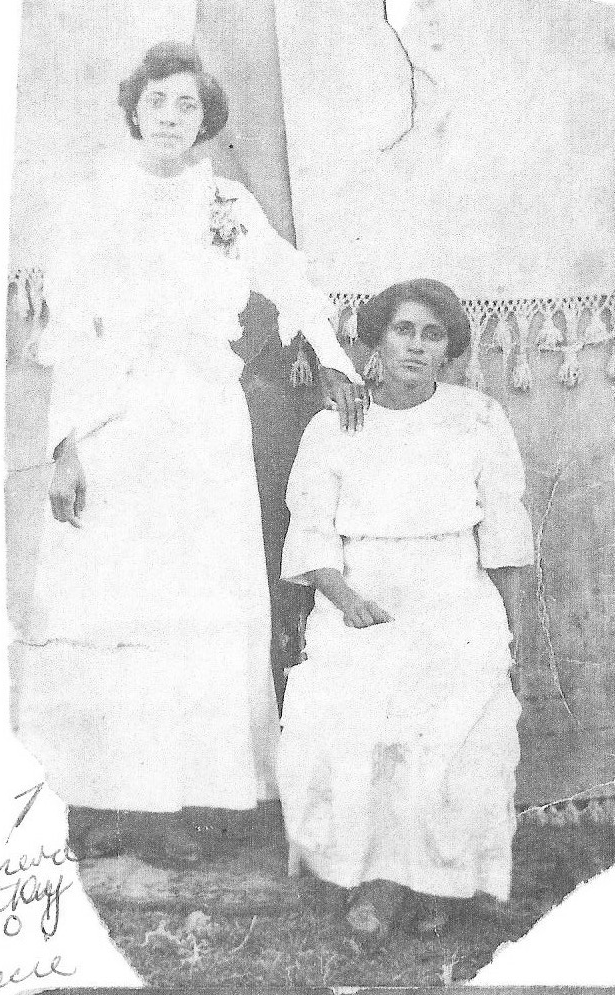
Wedding Day - Sisters Geneva Cathey Banks & Grace “Gracie” Cathey Cook Source: Family of Geneva Cathey Banks

Origins
Frances “Fannie” Shelton was born in February 1853 and was enslaved in Rome, Georgia. She was born into enslavement in Rome and, based on available research, was likely connected to and enslaved on the land now known as Possum Trot.
By 1870, while the family was living in Coosa, Fannie was recorded as a farm laborer. Alongside her parents and siblings, she contributed to the family’s growing economic stability—efforts that helped make possible her father Hardy Shelton’s purchase of land at Possum Trot in 1874.
Migrations
In 1871, Fannie left her parents’ home and married Leroy “Lee” Cathey, a formerly enslaved man who had been held by John and Sarah Cathey of Lincolnton, North Carolina. Together, they established their life in Rome before their descendants carried the family’s story outward into new regions, including Texas, and beyond, forming connections that extended beyond their place of origin.
Family
Frances “Fannie” Shelton Cathey and Lee Cathey were the parents of fourteen children, ten of whom survived to adulthood—all daughters: Joanna, Laura, Lucy, Mary, Anna, Antonia, Lula Alice, Emma Gertrude, Gracie Marie, and Geneva. The other children may have been sold during enslavement or died during childbirth.
Through these daughters, the family expanded across generations, forming connections through marriage into families such as the Hill, Lewis, Robertson, Echols, Hickman, Gray, Harper, Williams, Cook, and Banks families, among others.
Fannie’s marriage also reflects the deeply interwoven nature of the family, as her sister Lula Shelton married Lee Cathey’s brother, James Wallace Cathey—further strengthening the bonds between the Shelton and Cathey lines.
Notable descendants of this line include individuals such as Rodrigo Barnes, a former Super Bowl champion and member of Rice University’s First Four, as well as Alvin J. Hill, a former president of Georgia Baptist College in Macon and principal of the Cave Spring Segregated School for the Deaf. Their stories reflect only a portion of the legacy carried forward through this line.
From hands that labored to daughters who carried the line forward, her legacy moved outward while remaining rooted in the place it began.
This story continues to unfold through deeper connections, names, and discoveries still being brought to light.
Find out more at our gathering.