

Our Story
From Bondage to Legacy
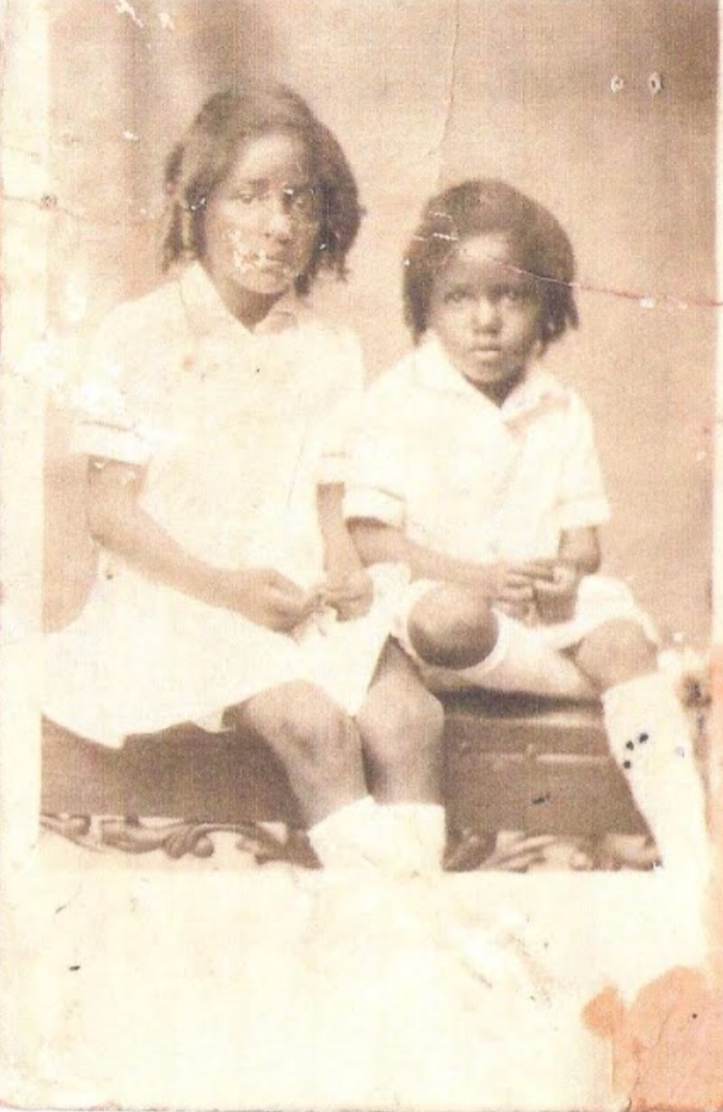
Grandchildren of Lee and Fannie Shelton Cathey Source: Family of Percy and Geneva Banks

Hardy and Mary Bearden Shelton were born into enslavement—Hardy in North Carolina and Mary in Georgia. They later relocated to Coosa, where they began raising their family of twelve known children: Laura, Lucy, Frances, Aaron Hardy, Mary, Lula, Joel, Judy, Rhoda, Henry, William, and Matilda.
Based on available research, their lives—and the lives of their families—appear to have already been tied to the land that would later become known as Possum Trot through enslavement. In 1874, that connection would be reimagined in a way none of them could have anticipated, when Hardy made a decision that would forever change the course of their family’s history.
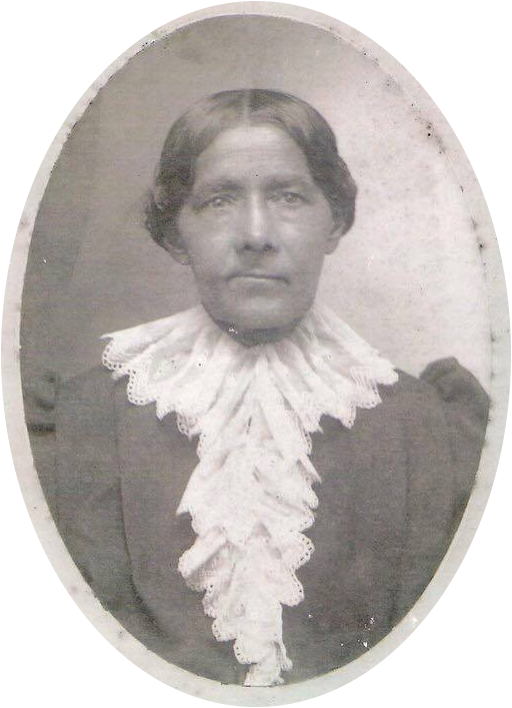
Mary Bearden Shelton, Wife of Hardy Shelton Shelton Family Matriarch Photo Credit: Family of Aaron Hardy and Fannie Key Shelton
Roots & Lineage
Mary’s lineage traces back through her mother, Lucy Bearden Spullock, who was born in Virginia before being brought to Georgia, where she lived and died in 1848 while still enslaved. Lucy’s father was an enslaved half-Cherokee man. These early roots reflect a lineage shaped by displacement, survival, and endurance across generations. A healer skilled in medicinal practices, Mary passed down her passion for caring for the sick to generations of her descendants, including her granddaughter, Lucy Cathey Echols, a well-known midwife in Central Texas.
Research suggests that the family’s connection to the Possum Trot landscape may predate documented ownership, potentially extending into the period of enslavement, with ties to the Spurlock/Spullock family, who held land in the surrounding area and were connected to individuals associated with early church and community structures.
From Emancipation to Land Ownership: The Coosa Years
Following emancipation, the family’s transition from enslavement to landholding can be traced through their residence in the (Coosa) community of Floyd County, Georgia.
In 1867, Hardy Shelton is recorded as a registered voter in District 1120, an area that included what would become known as Flatwoods or Mount Alto. By 1870, he is enumerated in Coosa, where census records indicate that he held personal property valued at $200 (excluding real estate)—a notable achievement during the Reconstruction era.
The 1870 census further shows that members of the Shelton household, including his children, were engaged in agricultural labor, suggesting that the family was actively working and managing a farm during this period. These records point to a period of economic stabilization and resource-building in the years immediately following emancipation.
Based on available evidence, it appears that through their labor and agricultural work in Coosa, the family accumulated the means to transition into land ownership.
Possum Trot: Land Ownership and Settlement Development
Following their period of residence and economic development in Coosa, the Shelton family transitioned into landownership in and near what is now known as Possum Trot. By 1874, Hardy Shelton purchased approximately 120 acres in Lot 59, establishing a foundational land base in close proximity to the Possum Trot area and within the settlement landscape.
This acquisition represents a critical moment in the family’s history, marking the transition from post-emancipation labor and resource-building to independent landownership and long-term community formation. By 1880, the family had relocated to and was established in the area in and around Possum Trot, where subsequent generations would continue to live, work, and acquire land.
In the decades that followed, members of the Shelton family and their extended family network expanded their landholdings into adjacent lots. By the turn of the twentieth century, Peter Powell and Irvin Spruce held land described in deed records as part of Lots 48 and 49, demonstrating a continued and expanding presence within the Possum Trot landscape. A 1901–1902 plat map, discovered by descendant researcher K. Stewart-Ross, further confirms that these landholdings were adjoining and geographically connected, forming part of a broader settlement pattern.
In 1903, Irvin Spruce acquired additional acreage extending into Lots 25, 26, 47, and 48. The inclusion of Lot 47 in this transaction reflects an expansion of existing landholdings into adjacent lots and does not displace earlier documented ownership interests in Lot 49. Under standard deed conventions, the absence of Lot 49 from this particular instrument indicates only that it was not part of that specific conveyance, rather than evidence of divestment though research is ongoing.
At the same time, historical deed records indicate that the land on which the church, school, and cemetery are located was treated as a distinct tract within the same geographic landscape. Earlier conveyances reference land in Lots 49 and 60 set aside for church and school purposes, and a 1925 deed conveying surrounding land to the Berry family expressly excepted approximately 1.5 acres belonging to Pleasant Hill School, confirming that the institutional parcel was recognized separately from surrounding private landholdings.
Deed records associated with the Berry family’s acquisition further reflect that additional portions of the property were expressly excepted, including land in the southern portion identified with Irvin Spruce. These references indicate that not all land within the broader area was conveyed and that some parcels remained separate, particularly if the boundaries correspond to the original lot lines referenced in earlier deed records.
This distinction is essential to understanding the land history of Possum Trot. While the Shelton family—including Irvin Spruce and Peter Powell—held documented ownership of portions of Lot 49 and surrounding lands, the church and school site appears to have been legally designated and maintained as a separate parcel, even as surrounding land was bought, sold, and transferred.
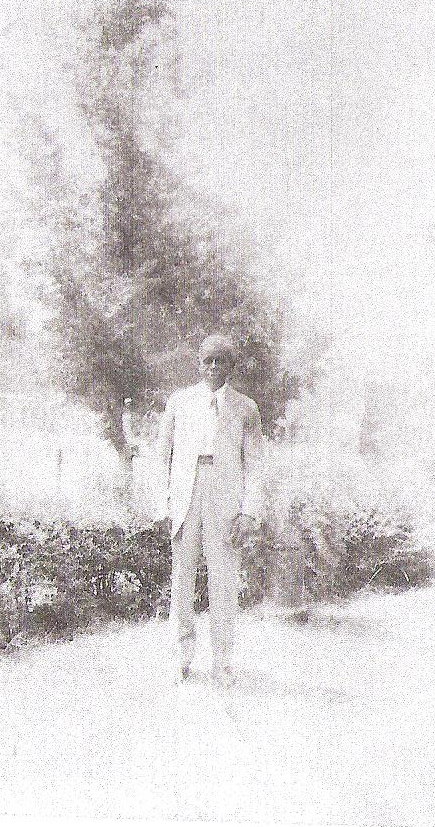
Photo Source: Aaron Hardy Shelton, Son of Hardy and Mary Bearden Shelton - Provided by Family of Percy and Geneva Cathey Banks
Accordingly, descendant-led research by Stewart-Ross, reflects a broader understanding of the area now known as Possum Trot—not as a single parcel defined solely by the church and school tract, but as a settlement landscape extending across multiple adjoining land lots, including Lot 59 and portions of Lots 48 and 49, where Shelton descendants established and sustained a land-based community.
Further research has expanded understanding of the historical and genealogical context of this land. In the early 2020s, Stewart-Ross identified and analyzed the Powell plat map and discovered the full Guion Miller Roll application filed by Mary Bearden Shelton, which provided detailed genealogical information and revealed connections to the Spurlock/Spullock family. These findings also highlighted relationships between the Spurlock/Spullock family and W. C. Bryant, identified in deed records as a trustee and historically associated with the Primitive Baptist tradition—later linked through research to having a possible tie to the Pleasant Hill Church.
Complementing descendant-led research, Sherre Harrington, director emerita of the Memorial Library at Berry College, conducted extensive deed research into the property, contributing critical insight into land transfers, boundary descriptions, and the institutional history of the site.
Based on deed research and analysis, the Shelton family’s presence at Possum Trot reflects a progression from early land acquisition in Lot 59 to expanded landholdings across adjacent lots, including 48 and 49, within a broader settlement landscape that also included a separately designated church, school, and cemetery tract.
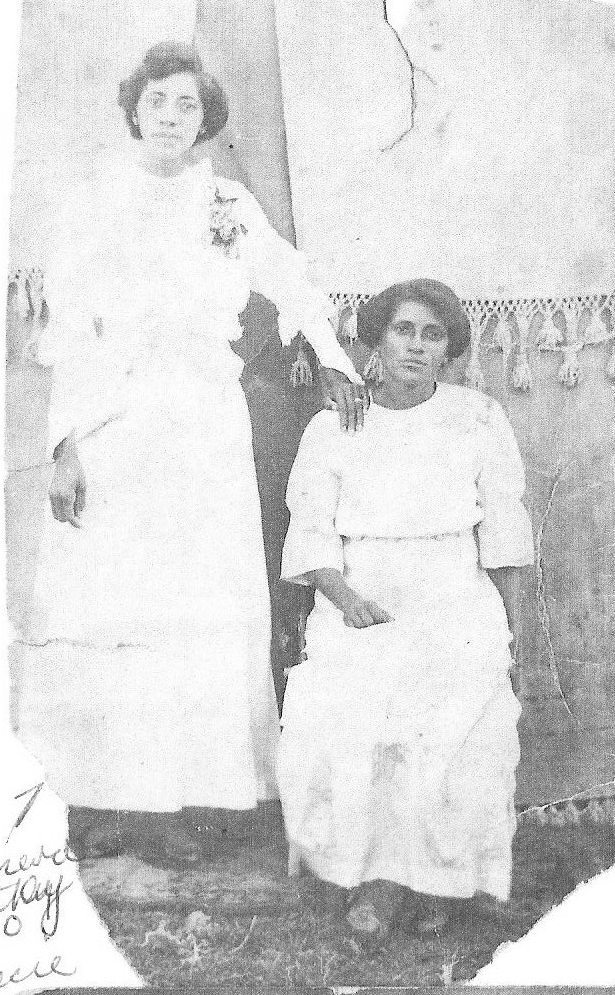
Photo Source: Geneva Cathey Banks and Gracie Cathey Cook - Provided by Family of Percy and Geneva Cathey Banks

Photo Source: Rome News-Tribune, Friday, April 17, 1953, p. 2, col. 1 (Mrs. Mary Shelton King). Mary was the daughter of Aaron Hardy and Fannie Key Shelton.
Transition & Migration
Beginning in the early 1870s, family members began to leave the area, with one branch temporarily relocating to Memphis. Following the death of Hardy in 1892 amid interesting circumstances pertaining to his land, Lee and Frances “Fannie” Shelton Cathey and their family migrated to New Baden near Franklin in Robertson County, Texas. Additional waves of migration continued into the early 1900s and throughout the Great Migration, reflecting a broader pattern of movement and transition.
In 1923, the settlement experienced another significant, mournful and unexpected shift following the death of Irvin Spruce, forcing many family members to leave Possum Trot continuing into 1924 with another unexpected shift. Some remained in Rome, while others migrated to different parts of Georgia and across the country, including cities such as Detroit, Indianapolis, Chattanooga, Atlanta, and beyond.
Though they were forced to leave the land they had called home, the connection to Possum Trot and to Rome remained. Across generations, families carried with them the memory of the land and the legacy of those who built it. And some would return in unexpected ways.
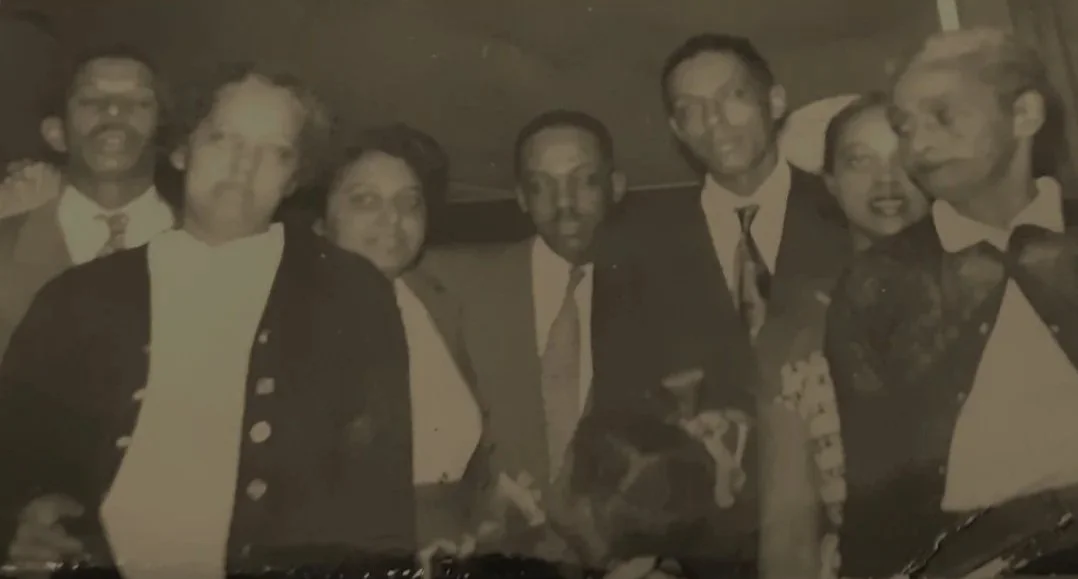
Photo Source: Family of Marcellus and Jessie Spruce Towers, Daughter of Irvin and Lucy Shelton Spruce (Far Right) Migration: Midwest Region
Reconnection & Preservation
In 2016, descendants from the Aaron Hardy, Lucy Shelton Spruce, and Frances Shelton Cathey lines came together to reconnect, research, and preserve this history. Through ongoing collaboration with Berry College, their efforts led to the installation of a historic marker and the use of ground-penetrating radar to better understand the family cemetery.
This work continues today through descendant-led research, preservation efforts, and community engagement.